
In vivo pharmacology is the study of how therapeutic candidates behave within living organisms, allowing researchers to observe integrated physiological responses that cannot be replicated in isolated experimental systems. By capturing whole-body interactions across organs, tissues, and molecular pathways, in vivo studies generate essential data on efficacy, safety, pharmacokinetics (PK), and pharmacodynamics (PD) during preclinical drug development.
The term “in vivo,” derived from Latin meaning “within the living,” refers to experiments conducted in whole organisms rather than in cells or tissue samples alone. This approach provides biologically relevant insight into systemic exposure, metabolism, immune modulation, and organ-specific effects before a therapy advances to human trials.
What is in vivo pharmacology?
As part of broader preclinical studies, in vivo experiments evaluate drug activity and safety in biological systems before clinical development. These studies assess how a therapeutic candidate interacts with integrated physiological systems, including organ function, metabolism, immune response, and systemic exposure.
Unlike cell-based experiments, in vivo pharmacology captures whole-body complexity. This makes it essential for diseases where multiple tissues and pathways interact, such as MASH, obesity, fibrosis, diabetes, and CNS conditions.
How are in vivo pharmacology studies designed?
Well-designed in vivo studies aim to ensure translational relevance, reproducibility, and statistical robustness. Core elements often include:
- Randomization and appropriate control groups
- Dose-ranging or dose-escalation strategies
- Clearly defined primary and secondary endpoints
- Blinding where applicable
- Statistical powering to support reliable interpretation
Depending on the therapeutic area, studies may incorporate longitudinal disease monitoring, biomarker profiling, pharmacokinetic sampling, and mechanistic analyses such as RNA sequencing or imaging-based phenotyping.
In vitro vs in vivo: What’s the difference?
A common question in drug discovery is the difference between in vitro and in vivo studies.
In vitro and in vivo studies serve complementary roles in drug discovery, differing primarily in biological complexity and translational relevance. In vitro experiments are performed in controlled laboratory environments using cells or isolated biological components, whereas in vivo studies evaluate therapeutic candidates within whole living organisms to capture integrated physiological responses.
In Vitro
- Conducted in solution, cells, or isolated tissues
- High-throughput screening
- Controlled experimental environment
- Mechanism and target validation
In Vivo
- Conducted in living organisms
- System-level biological evaluation
- Complex physiological interactions
- Translational efficacy and PK/PD
During preclinical research animal studies help determine whether a compound has sufficient safety and biological activity to advance to clinical testing. In vivo pharmacology studies confirm whether those compounds demonstrate meaningful therapeutic effects under disease-relevant conditions. Both are essential, but in vivo data ultimately support clinical decision-making.

Why in vivo pharmacology services matter in complex diseases
In vivo pharmacology is particularly important in diseases driven by systemic dysfunction, where multiple organs, pathways, and feedback mechanisms interact simultaneously. Studying therapeutic candidates in whole living organisms enables researchers to evaluate integrated physiological responses, disease progression, and treatment effects that cannot be fully captured in reductionist experimental systems.
At Gubra, our in vivo pharmacology services focus on translationally relevant models across:
- MASH and liver disease – including advanced fibrosis assessment
- Obesity and metabolic dysfunction
- Diabetes and glucose regulation
- Kidney fibrosis and renal disease
- Lung fibrosis and pulmonary research
- Neurodegenerative disease models
- Women’s health and hormone-related conditions
Our deep disease expertise allows for more precise endpoint selection and stronger translational interpretation compared to generalist providers.
Standard endpoints in in vivo pharmacology typically include:
- Clinical observations and body weight monitoring
- Disease-specific functional readouts
- Histopathology and fibrosis scoring
- Biomarker quantification
- Pharmacokinetic profiling
- Molecular analyses (e.g., RNA sequencing)
- Imaging-based phenotyping
- Advanced phenotyping technologies enhance these endpoints. For example:
• Quantitative tissue assessment through histopathology services
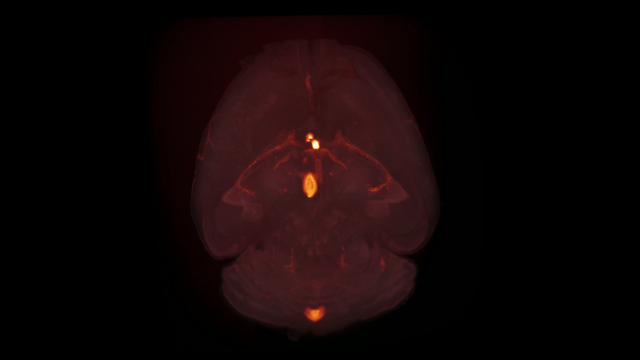
• Structural visualization using 3D whole-organ imaging
Designing an in vivo study for your program?
Selecting appropriate disease models, endpoints, and PK strategies can significantly influence translational outcomes. Early alignment between pharmacology, biology, and clinical objectives helps reduce uncertainty before IND-enabling studies.
If you are evaluating study design options or considering external collaboration, our scientific team can provide input tailored to your therapeutic area and development stage.